Board Certified · Obesity Medicine
Lifestyle Medicine
Direct-Pay · No Insurance
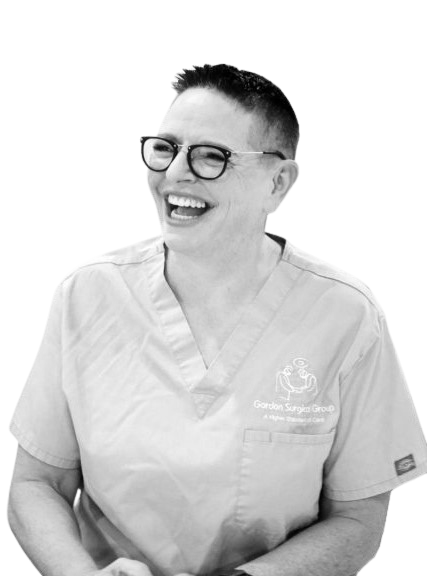
Michelle E. Gordon
D.O.
DABOM · DACLM · FACS · FACOS
and your weight is still increasing, this is a predictable pattern.
Midlife physiology changes how your body responds to effort. Weight gain continues even as intake and activity stay stable.
DABOM · DACLM · FACS · FACOS

Board certified in obesity medicine, lifestyle medicine, and general surgery. I spent fifteen years in surgical practice before specializing in women's metabolic health.
Surgery is downstream medicine. By the time a patient reaches the operating room, the disease has already progressed. Diabetes doesn't start with the amputation. It starts years earlier.
I watched that progression long enough to know I was in the wrong part of the timeline.
I kept seeing the same patients return. Accomplished professionals whose metabolic health was declining. Perimenopause and menopause were changing their physiology. The system was treating the complication, not the cause.
I work with women who have been doing it right for years.
The approaches change. The pattern doesn't.
Most come to me already on a GLP-1. Some have stalled. Some never had clinical oversight. The medication is there. The results are not.
At some point, their body changes. Food stays consistent. Training increases. What used to work stops working.
Then, the pattern continues.
Estrogen declines. Insulin resistance develops. Body composition shifts.
Obesity is a chronic, relapsing disease. It requires physician-led care over time.
I diagnose first. Intervene with precision. Monitor relentlessly. Every patient receives physician-led care grounded in obesity medicine and the specific metabolic shifts of midlife. Not a protocol. Not a program. Not a wellness trend.
And I prescribe medicine when appropriate.
It's a small panel. It's a one-year clinical partnership. You get access to my clinical thinking, pattern recognition over time, and a physician who understands the physiology.
If you're ready for physician-led care, apply below.
Dr. Gordon
This is a one-to-one telehealth medical practice. Dr. Gordon personally evaluates, diagnoses, and manages every patient. There are no hand-offs, no mid-levels, no shortcuts.
You begin with an application. If accepted into the practice, you enter a comprehensive medical evaluation. Labs, history, metabolic assessment. The evaluation identifies what is driving the pattern.
Dr. Gordon and her team build your medical strategy based on your specific physiology. Hormone status, metabolic function, medication review, and the precise interventions your body requires at this stage.
You work directly with Dr. Gordon and her team for a minimum of one year. Ongoing monitoring, medication management, and strategy adjustments as your body responds. Annual investment is five figures.
Application does not guarantee acceptance. Acceptance is limited.
“Working with a physician who specializes in women, hormones, the menopause transition, and metabolic health has changed everything. I’ve lost over 20 lbs and I’m feeling great.”
No. This is a direct-pay obesity medicine practice by design. There is no insurance billing.
Care is a one-year clinical partnership with a five-figure annual investment. Access is by application, and acceptance is limited.
It is a one-to-one telehealth practice. Dr. Gordon personally evaluates, diagnoses, and manages every patient. There are no hand-offs, no mid-levels, no shortcuts.
Women in perimenopause or menopause whose weight continues to increase despite consistent effort, including those already on a GLP-1 who have stalled or never had clinical oversight.
She is board certified in obesity medicine (DABOM) and lifestyle medicine (DACLM), and a fellow of the American College of Surgeons (FACS) and the American College of Osteopathic Surgeons (FACOS), with fifteen years in surgical practice before specializing in midlife women's metabolic health.